
The Santa Ynez Valley is Changing and it is Leaving Its Locals Behind
By Oliver Tensley
About the Author

My name is Oliver Tensley. My Dad, Joey, opened Tensley Wines in 1998 while working at Beckman Vineyards. He still owns it today. My Mom, Jennifer, co-owned it for 20 years. When my Mom was pregnant with me, they lived in the winery in Buellton which Tensley still operates out of today. They had to shower with a hose. Since then Tensley has become internationally renowned, the brand’s Colson Canyon Syrah was once awarded 17th best wine in the world, Tensley now operates out of two different wineries, and my childhood was more financially secure than that of either of my parents’. I am a beneficiary of how the Santa Ynez Valley has changed.
I make this point for transparency. It would be unfair of me to write all of this without noting that I would not be where I am today had it not been for Sideways and the changes that it induced.
I was born in 2003, and spent the majority of my life in Los Olivos. Sideways came out in 2004. Up until I moved to Los Angeles for college in 2021, I had lived the entirety of my life in one part of the Valley or another. Watching the ramifications of Sideways had been my life whether I realized it or not. This is why the bulk of the story focuses on Nathan Casey, Tino Diaz, and Henry Molina – they are all my personal friends and near my age. Generation Z, and especially those born in the immediate years before or after Sideways, have a unique perspective in the Santa Ynez Valley. We are too young to remember a fully pre-Sideways area, but also have memories of an area that feels different to the one we see now.
Watching Sideways today gives a strange feeling. As Miles and Jack walk under the A.J. Spurs sign I could swear everything looked the same in 2004 as it does in 2024. But, as they continue on Highway 246 shots are littered with nostalgic businesses that I forgot ever existed, others that I was too young to ever know were there. It is a snapshot into a world that the movie itself changed.
My decision to write this story came last Winter. As I came home for Christmas, I noticed that R Country Market, a store in Los Olivos, had closed its doors. The store did not change ownership, and has since returned as Gandolfo Market, carrying the surname of its longtime owners. But, it was a telling change. I grew up in Los Olivos, when I was eight years old I lived about a quarter mile from “R Country,” as we called it. It was just a small town grocery store. My mom would let me buy a Gatorade there after school. Gandolfo Market sells Gatorade, but at a higher price in a much more high-end store. It’s a reasonable decision for the Gandolfo Family, rent is rising and if they wanted to keep their spot in the heart of Los Olivos something had to change. If anything, I am just happy for them that they figured out a way to make it happen. But, as a kid from Los Olivos it was a piece of my childhood gone before my eyes. That is the story of the modern Santa Ynez Valley.
Introduction
The Santa Ynez Valley did not become expensive yesterday, it has been this way, only it is now increasing. Young residents of the roughly 18,000 person Valley have had to get creative finding things to do for years. But, now it is symbolically different. The prices have gotten out of control, the Valley’s main streets have never felt less made for its young people, non-locals move into houses locals could no longer afford, but residents still have their spots. The same tree that a high schooler used to hangout under off of Happy Canyon Road in 2018 is still there as they return from college, and it’s still their spot – still rural and unknown. For Nathan Casey that place is the ironically named, “Shithole’s Beach.”
Nathan Casey
Not technically in one of the Valley’s six towns (Ballard, Buellton, Los Alamos, Los Olivos, Santa Ynez, and Solvang), “Shithole’s” as Casey refers to it, is a beach just outside of the Valley. The beach is secluded and not signed, thus Casey has asked me not to be any more specific about its location than that. Shithole’s is a short drive from Buellton and much further from any other real population center, thus making it an honorary feature.
Casey said, “All of the nostalgia is in the exciting places that were elsewhere…Shithole’s is untouched…Nobody knows of it but the stoners.”
He said he once went on a perfect beach day, roughly 80 degrees Fahrenheit, sunny with little wind, and there was not another person there. He remained for hours not once encountering someone else.
“Nostalgia is the stuff people don’t know about,” he said.
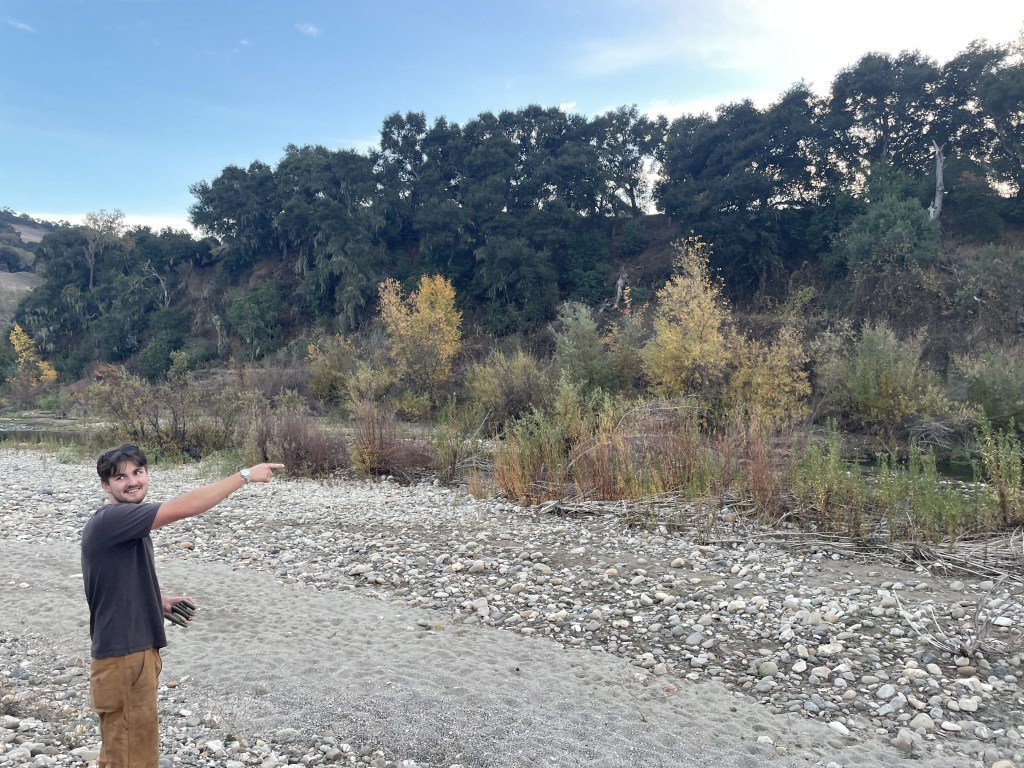
Nostalgia carries extra weight in a changing area and the Santa Ynez Valley is changing. When home does not feel like it used to, finding moments of nostalgia can be few and far between. But, a reminder of days when things were different can be heartening.
As of the time of writing, the median listing price on Zillow for a house between all six Santa Ynez Valley communities was $4,590,000. But Nathan Casey, at 21 years old, is not looking to buy a house. He just wants to rent an apartment and even that is proving quite the challenge. For a single-bedroom apartment on Zillow the median price is $2,395 a month in the Valley.
Casey is an aspiring winemaker working for Tensley Wines. He went to college in Colorado for two years, but moved back home to the Valley in June 2023. He found a love for viticulture and decided to move home to pursue it. Last winter he started his own label, Delft Blue Wines, which he operated when time permitted at Tensley’s facilities. Only by November 2024 the dream was already on life support. Casey has spent the last 16 months living in his parents’ guest house, budgeting winemaking costs, and above all else trying to find an affordable place to live on his own. He was looking to pay $1,000 a month in rent or less. But, even that was going to be without wriggle room.
Casey said, “To live paycheck to paycheck at my current rate [it needs to be] $1,000 a month…my gas and car maintenance costs are so high…groceries, and just a couple hundred left over for everything else…no savings being put away.”
This month Casey made the tough decision to tell his boss he will be returning to school full-time in January, leaving Tensley Wines. He had been attending Allan Hancock College in Santa Maria, Calif. part-time and will set out to complete his associate’s degree. He hopes to transfer to a viticulture and enology program for his bachelor’s degree. His dream is not dead, but its path has had to shift.
Casey’s story is exemplary of how the Valley has changed. His boss, Joey Tensley, moved to Santa Ynez in his early 20s with the same goal as Casey. He founded Tensley Wines in 1998 while working for Beckman Vineyards. By 2002 the Bakersfield native was successful enough to run his winery full-time and by 2009 Tensley’s Colson Canyon Vineyard Syrah had been awarded the 22nd best wine in the world. Now, Casey, even under Tensley’s wing, feels that route is impossible.
He said, “In the beginning I was still hopeful, I’m like, ‘Oh, this is cool for my work. This area is blowing up, this is going to be on the map and I can be somewhere,’ then I realized, I don’t have my foot in the door yet, I don’t own property out here…in the more recent times where I’ve been figuring out my financial stuff and trying to make it work here…I’ve really started to realize, like, I grew up here and I’m probably going to be locked out pretty soon. For myself, odds are, I’m never going to have the money to buy in at this point or 10 years from now.”
Casey was born in Santa Barbara, Calif. but moved to Buellton with his parents at age three. They moved to save money, but two decades later their now 21 year old son cannot afford to live in his own hometown and feels he will never be able to. As an aspiring winemaker it is a sad reality, but as a local to the area it is sadder.
After spending several years in Buellton, Casey, his parents, and two younger brothers moved to Solvang. It was in Solvang where Casey’s roots in the Valley grew deeper. His first job was on a horse-drawn trolley as a tour guide in the town. He can still tell you why many buildings in Solvang have a miniature house connected to them, where to look to see Ronald Reagan’s old ranch, or he can tell you his own local knowledge. Maybe he’ll tell you what Santa Ynez River fishing spots are best to avoid a ticket from Solvang PD – Casey is from Solvang.
Having worked on the trolley, Casey has spent a fair amount of time taking tourists around his area. Now, working in wine, his job is once again to make something for out-of-towners. He takes no issue with this concept, he loves winemaking, and loved the personal interaction of being a tour guide. But, the Valley itself is evermore made for out-of-towners now too.

He said, “The area went from like a suburb with a couple wineries to a destination. Like somewhere you vacation, somewhere you go when you have a lot of money to spend and you want to treat yourself. You want a really good bottle of wine out here? It’s going to cost you some money. You want a really good meal out here? It’s going to cost you some money. And for the people vacationing it’s great, it’s great fun. It’s very safe, it’s very mellow and relaxed, driving is really easy…not a lot of traffic or anything. Very comfortable, very comfortable place to get away from LA. But, it’s really only if you’re visiting…If you live here you either are making plenty of money and are well enough off to do all that…or you’re going to be forced out.”
He continued, “In more recent years living in a destination…I can appreciate that it’s an experience a lot of people would like to have. A lot of people would give up a lot and do give up a lot to live in an area like this and live a lifestyle surrounded by the things that surround you here: the mountains, the trees, the wine, the people. But, for me…I know it’s temporary, like no matter what I do it’s temporary.”
Henry Molina
Henry Molina is from Solvang too. He moved from San Luis Obispo, Calif. with his parents and older brother at age five. He spent a few months in late 2023 and early 2024 living in Oregon as he and his mother had been evicted from their longtime residence in Solvang. They have since moved back, managing to find a place they could afford, but Molina and his mother share a single-bedroom apartment in which Molina sleeps in the living room.
He does not mind the set-up. He works in Buellton at Blenders in the Grass, a smoothie bar which is a staple of the Central Coast. Most of his coworkers are either still in high school or are in their mid 20s, a tough spot to be for a 20 year-old. But, Molina is happy just to be back in the Santa Ynez Valley. He took issue with it in high school. He found it too small, too boring, maybe even like he did not fit in. But, after his stint in Oregon he felt that the Valley was a special place. Many times he still finds it boring, finding people his age is a challenge. But, he learned to be grateful for the Californian sun he feels or the Santa Ynez Mountains that lurch over his hometown. Being forced to leave and forced to downsize upon returning made other realities about the Valley clear too.
Molina said, “It’s becoming less and less for me…there is nothing here for locals anymore.”
Henry Molina’s Mother, Echo Molina, worked for over a decade at the Solvang Book Loft, a book store along Mission Drive. Above the Book Loft was the Hans Christian Andersen Museum. This, along with the Book Loft’s spot on Solvang’s main road, meant that the store attracted tourists. As a kid, when Molina would spend time with his Mother at her work, he would interact with tourists. In high school he would briefly work at the Book Loft further increasing his interactions with those visiting. Being from Solvang meant that Molina has been around tourists since he was five years old. It was normal for him, he is from a tourist destination. Though, he says it is different now.
Molina said, “Solvang has not adapted to the world outside of tourism allure…I objectively can’t be mad at businesses making money, but it is a shameless push for tourists. There is no place for me here…most of the economy used to be based in tourism, but now it is only that.”
He notes the closure of a local toy store, Natalie’s Dollhouse, as a moment he realized his version of Solvang was gone.
He said, “I used to go to Natalie’s Dollhouse as a kid…stuff here used to be for us. They used to open businesses that were made with locals in mind, now it is only ever tourism. They never open toy stores or places where I can buy something that I need. They always open places that are useless to me, like the ziplining place, or like a fancy cheese shop.”
Molina is referencing Highline Adventures, a ziplining business which opened last year technically in Buellton, but near the border with Solvang. Molina worked there before moving in 2023.

He added, “It’s upsetting. The money that comes in doesn’t go back to me, there’s no jobs, even if there were you can’t just make a wage and afford an apartment. It’s especially hard in Solvang, but everything around it is wildly expensive too…I feel trapped.”
For Molina the situation is bleak from two sides. First, as he said, he simply cannot afford to live in Solvang. He can live with his mother for now, but makes nowhere near what he would need to live on his own, and already can hardly afford the price of everyday things in Solvang. Second, even if he could afford it, his hometown feels less like home than ever before.
He said, “If you feel that attachment [to the town] it’s not there anymore. Honestly, it’s close to being unrecognizable from my formative years…it’s sad to see it so different. It’s losing its identity, it’s losing its purpose of living here. It’s just another wealthy and pretty place for second homes.”
He added, “It’s still a safe place to raise a family, but it no longer has any personality behind it…the places that make me nostalgic are gone…a shell of itself is a good way to put it, everything looks the same, but internally it isn’t it.”
Molina says he can only still truly feel Solvang off the beaten path.
He said, “Only those [places] not touched by the changes still feel that way…generally nature spots…Hans Christian Andersen Park, the riverbed by the Alisal, those places mean a lot.”
Tino Diaz
Juventino “Tino” Diaz is from Los Alamos, the most rural and once, “country” of the Valley’s six communities. Yet, its culture seems to be eroding faster than any other. Los Alamos’ population has halved since 2019, dropping from roughly 1,600 to now slightly over 800. It fell from just over 1,300 to about 800 in the span of a year between 2021 and 2022. Ironically, Diaz once saw a, “ghost town,” and now sees something livelier. But, not lively with residents, lively with tourists.
When asked how long he had lived in Los Alamos, Diaz said, “since I was born.”
Diaz lived at a mobile home park in Los Alamos until he was 13. His earliest memories are of him and his brothers there, or a mile away at Olga Reed School playing basketball or soccer. He attended Olga Reed from kindergarten to 8th grade as it was the only K-8 available to residents of Los Alamos. He sees change in his town, his family does too. He sees families forced to move out, landlords turning beatdown complexes upscale once old residents leave, and the opening of business after business that he cannot afford.
Change is a confusing thing. For Diaz this is especially true. Like Nathan Casey, he is an aspiring winemaker. Diaz also works for Tensley Wines on the property of Martian Vineyards. His family helped plant Martian’s grapes in the 1990s. His grandparents also worked as grape pickers. When he can start his own brand he wants to call it, “Third Generation Wines” in order to reflect how long his family has been in the business. Los Alamos becoming more and more coveted has meant nothing but good things for the wine business, so how can an aspiring winemaker be upset at this development?
He said, “It’s bittersweet…as I grow up, for me, it’s more sweet. If I was younger, and a kid trying to have fun, I would say it’s more bitter…at least for the job I work in, a lot more people who are into wine moved in. All the fine dining on the main street brings fine wine, people who come to drink it…but, if I was younger, as a kid, I would find it kind of bitter.”
Even if he has unimaginable success in the wine business due to an increase in tourism, where will it leave those around him? His parents’ hands helped create Martian Vineyards, but if they could not afford to live in Los Alamos then they would have been nowhere near it – Diaz would have no connection to the area or wine at all.
He said, “It’s kind of scary. Especially with the new houses that are getting built…it just shows that they want to make it a bigger town and they want all the houses to be around that [price] range.”
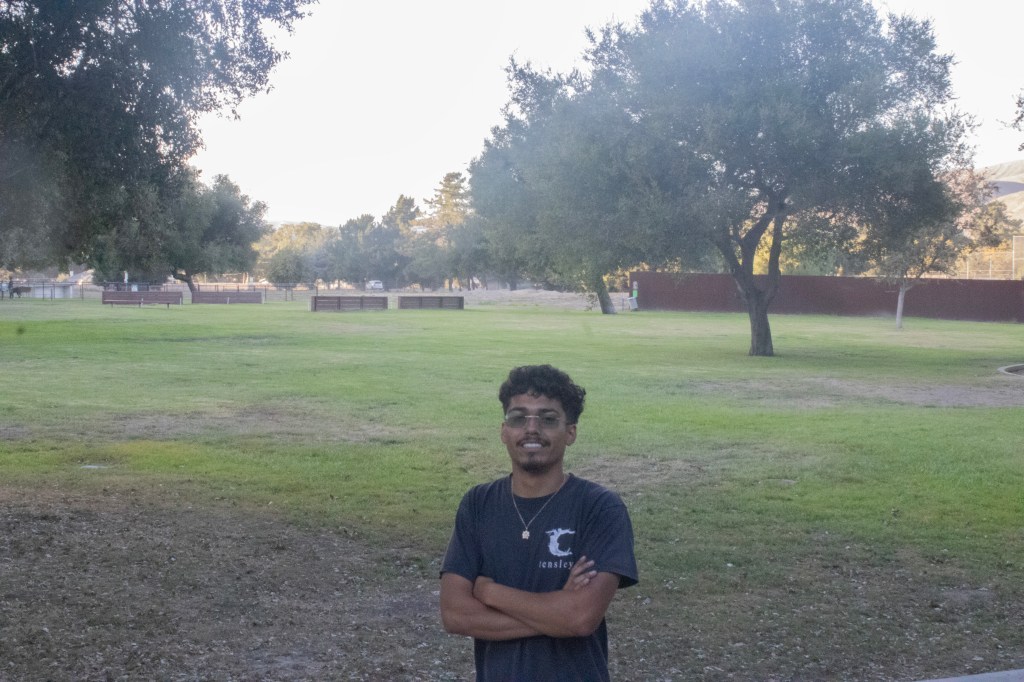
Diaz’s connection to his hometown should never be questioned. His keys are attached to an LA Dodgers lanyard, which seemed odd for someone who had never mentioned an interest in baseball. He said he likes to think that the infamous “LA” logo stands for “Los Alamos.” However, LA now has much deeper ties to Los Alamos than the same initials. In the last few years, Angelenos have been moving into Los Alamos often.
“We’re used to a different way of life,” said Diaz.
Los Olivos and especially Solvang have received more LA-based press than Los Alamos, but Los Alamos was the most ripe for change. Los Alamos is disconnected from the rest of the Valley, by car it is 11 miles from its nearest neighbor, Los Olivos. Its kids do not even attend Santa Ynez Valley Union High School, they instead fall in the Santa Maria Joint Union High School District. This isolation, and its extremely small size, meant that changes could come in to Los Alamos at a faster rate than any other town in the area.
Diaz says he remembers everything starting to change around 2015, when he was 11 years old. He cites the closing of a bike shop and the opening of a restaurant, Plenty on Bell, in its place as a moment he could tell times were changing even as a kid. “Plenty,” as Diaz refers to it, opened in early 2016 and is highly esteemed (it even has its own page on the Santa Barbara tourism website). Diaz is not critical of Plenty, he worked at Full of Life Flatbread (a restaurant of similar stature on the same street as Plenty) for two years and has nothing but positive things to say about it. But, it was a sign of change that he was correct in seeing.
In a Santa Maria Times article released on the same day as Plenty’s opening in 2016, Mary Ann Norbom notes the town’s population size of under 1,900 (it was under 1,700 to be more accurate). She was creating the image of a small, rural town that now has a high-end streak to it.
She writes, “Local foodies have already discovered the culinary gifts this small community has to offer; now word is spreading. In July, Wine Enthusiast magazine included Los Alamos in its national list of ‘The Foodie’s 5 Must-See Wine Country Destinations.’”
That population size of under 1,700 is now under 900, and that attention is precisely why.
Diaz said, “[the articles] did bring a lot of attention to the town…[people] were willing to move in at whatever price and I think that’s why the prices just went up and up and up and up.”
He continued, “all the houses have at least doubled or tripled in price…my parents got their house for, I think, $250,000, it’s worth $800,000 now…a lot of the houses that are usually worth like not even more than $150,000 or $200,000 got remodeled, are still the same houses, and got sold for $400,000 or $500,000.”
Regardless of demand, the population of Los Alamos is facing a steep decline. People may be willing to move in at whatever price, but many either do not stay or treat it as a vacation home. Otherwise the population would not today be roughly half of what it was just five years ago.
The timing of the population drop off is not shocking either. Valley residents from Buellton to Santa Ynez would tell you that the COVID-19 Pandemic played a major role in the area’s ongoing change.
Diaz said, “I think [the change] really popped off…right around COVID. Here, big time. That’s when all the articles got started.”
This theory aligns well with the population of Los Alamos which spiked in the mid-2010s before beginning to drop, taking a slight increase in 2020, then facing a steep decline in 2022. In fact, Los Alamos and Los Olivos both saw somewhat sharp inclines in population that year. Los Alamos grew by about 5% and Los Olivos by about 17%. Los Alamos and Los Olivos are notable for being the two towns that became major tourism hubs, but unlike Solvang, had not been in prior eras.
Diaz has not lost hope in his town, however. He sees that it has changed, that it is more expensive, but says its roots remain untouched.
He said, “I think the town will grow on [new people] instead of them growing on the town.”
His optimism, though, falls away when talking about local businesses.
He said, “[businesses] are for people from out of town…as long as it is on the main street they know it’s a main attraction and they know the tourism is going to be there every weekend…the prices aren’t for me. I mean, maybe like in a couple years if life is good, but right now? No.”
Media Coverage of the Santa Ynez Valley
Now, at least among younger people, there is a valley-wide consensus that businesses are opened for the sake of non-locals. There are many reasons for this: the rise of the wine industry, the opening of Chumash Casino Resort, Solvang’s unwavering popularity, the Valley’s natural beauty, and maybe even just the American urge for constant progress. But, if all of those factors had created a perfect storm, media coverage was the thing that pushed it over the edge into a hurricane.
The movie Sideways was set in the Santa Ynez Valley in 2004. It followed Miles (played by Paul Giamatti) and Jack (played by Thomas Hayden Church) as they went wine tasting in the area. It was shot in the Valley and used the names of many real wineries. Not only did this personalize it for locals, more importantly it informed the mainstream that the Valley existed (also making frequent reference to its proximity to Los Angeles).

The 20 year anniversary of Sideways’ release was Oct. 22 of this year. Two decades later it has left quite the legacy in the Valley. People have stopped pouring wine spit buckets on themselves (much to the pleasure of those working in Valley tasting rooms), but Sideways’ impact is hard to measure through the eye alone. The hotel Miles and Jack stayed in, the Vineyard Inn, has since been rebranded to the Sideways Inn. Though, other than that the Valley does not often boast its role in Sideways, as its role in Sideways was what made it known.
Former mayor of Buellton, Judith Dale, said, “Sideways put the Santa Ynez Valley on the map.”
She also said, “Sideways…really gave tourism an umph…there’s even tours that you follow the Sideways movie going different places.”
Santa Barbara County Councilwoman Joan Hartman said, “[Sideways] radically changed Los Olivos,”
Her assistant and lifelong Valley resident, Meighan Jackson-Dietenhofer added, “After Sideways definitely there was more awareness in the general public, not just here, like everywhere, LA and stuff, and sort of an intrigue with coming and finding little gems and being in this rural place that they never really knew about.”
Being a rural place that no one really knew about was not exclusive to Los Olivos. The whole Santa Ynez Valley had that appeal. Sideways was about wine, and in many ways the entire Santa Ynez Valley became about wine too. However, by piquing interest in the area’s wine, it piqued interest in the area more broadly.
20 years ago any mention of the Santa Ynez Valley in media was incredible to its locals. Sideways was a surreal thing, and any tourism promotion done by a newspaper in another part of the state was a welcome surprise. Now, those articles feel far too common for some. They are another reminder for people from out of town to come in.
Since the start of 2022, the Los Angeles Times alone has written 15 arts and culture pieces on either the Santa Ynez Valley, a town within it, or a business within it. The number rises to 23 if listicles that include the Valley, a town within it, or a business are also counted. In the span of a day on Oct. 22, the 20th anniversary of Sideways, the publication released three separate articles about vacationing in the Valley. They featured one about the Valley as a whole, another about the town of Santa Ynez, and another about Buellton. Though, the LA Times articles all avoid one phrase bound to get a reaction in the Valley.
“The new Napa Valley” is a label with a lot of weight behind it. This August, British outlet, The Times, dubbed the Valley just that in a piece called, “I’ve found the New Napa Valley – and it’s more laid back and fun.” In the wine world, especially in America, there is no bigger compliment. There is also no bigger sign of prices rising and tourism booming. This sentiment, although seldom written directly, is echoed in other pieces.
In a Forbes article entitled, “How Santa Ynez Valley Quietly Stole the Spotlight from from California’s Prestige Wine Regions,” Lauren Mowry writes, “Santa Ynez Valley has evolved from rural ranching and vineyard hinterland, into a world class culinary and lodging destination that’s giving Sonoma and Napa a run for their money.”
If one reads enough tourism articles on the Santa Ynez Valley written by outsiders they will notice an oft used word in that quote which is not quite as complimentary, “hinterland.” It is this framing that separates locals from tourists, and also deepens the conflict between the two. Locals are from this so-called hinterland, and it was an influx of tourism and non-locals moving in which made it the “destination” it has become.
Within the same article Mowry writes, “the problem with such rural gentrification is that it erodes a region’s longstanding cultural history and character in favor of flash and glitz…Santa Ynez Valley has maintained a firm connection to its roots, given the economy is still driven by agriculture and ranching, the equine industry, and tourism.”
It is true, the outside looks the same, locals would take little issue with that sentiment. But, otherwise there is disagreement. Celebration of, in Mowry’s words, “gentrification,” is bound to feel insulting to the area’s residents. As if now that an outside influence has come in, the Valley finally meets some upscale standard that its locals never agreed to. Worse yet is the implication that nothing was lost. Speaking with Santa Ynez Valley locals there is no consensus on what is happening to the region. Some say it is gentrification, others say it is not, some say that development was bound to happen, others say it could have been slowed, but few locals would tell you that it had no effect on the area’s culture or character. Even the most beneficial land developer or winemaker would tell you that the fabric of the Valley is changing with its newfound celebrity. For a non-local to write an article saying otherwise strikes right at the heart of the disconnect.
In the aforementioned Times article Francesca Angelini writes, “Then there’s the Danish town Solvang. Which, unless you’ve got a niche fetish for a Scandi kitsch take on a Borrowers’ village, is best avoided.”
In an article which is supposed to be positive of the Santa Ynez Valley there is a blatant insult at one of the six towns. As if it does not meet the same upscale standard referred to earlier. How is that going to make locals more comfortable with outsiders coming to visit?

Tourists come to the Valley as an escape – their wonderland nestled in the hills. For a long time the Santa Ynez Valley was proud to be such a thing. A hole in the wall type of place with friendly locals who were happy to see outsiders appreciate the quaint feeling of their hometown. But, as more tourists came their vision never changed, so the Valley changed for them.
Before the Valley was a wine destination, Solvang was a weekend getaway. Before there was Sideways, there was “Little Denmark,” a 1947 article which appeared in the Saturday Evening Post. 80 years later, “Little Denmark” is a bit aged. Talks of Atterdag School, an almost entirely Danish population, and Solvang as a beacon for Danish democracy during World War II are no longer relevant in 2024. What is relevant is the mention of Solvang as a tourist destination in a newspaper, the first of many. But, the Valley’s history appealing to outsiders predates Solvang’s tourism boom.
Historical Context
It is estimated that what is now called the Santa Ynez Valley has been inhabited for 13,000 years. From 13,000 years ago to the 19th Century, the area’s only human inhabitants were the Samala Chumash. The Chumash Nation spanned from modern day Malibu to Paso Robles, Calif. The Samala were the Chumash tribe based in the Valley. The nation as a whole was known for its aquatic prowess, particularly its boat making capabilities. However, as the Samala were an inland group their specialty was basket weaving. This is the deepest history that the Valley has to offer.
Vice Chair for the Santa Ynez Band of Chumash Indians Elders Council, Kathleen Marshall, said, “The Valley is not about a Danish town, it’s about the Natives that lived here before.”
She feels that what is happening now is a natural progression of what has transpired since Spanish colonization of the area. ‘Alaxulapu, the Samala name for their homeland, has been undergoing change for centuries.
Marshall said, “We can’t keep it the tiny town that it was, because if we could do that there wouldn’t be a Danish town here, it would just be Chumash land. But, we can’t keep it that way, we have to change, that’s just how it is. We’re getting more people. So, I think we’re changing for the better. I think we’re making the Valley a better place to live and unfortunately that comes with the high cost of living.”
She added, “It has lost something but…I think it happened a long time ago when they colonized my ancestors.”
Early-1800s colonization of the Valley would forever change its trajectory, but the Chumash would not be forgotten in their homeland. The Chumash Casino Resort brought prosperity to the group which had been oppressed since the arrival of the Spanish. Now, even memories of a reservation with no running water until 1969 seem distant. Their ascent has continued with the construction of a museum and cultural center near the reservation in the town of Santa Ynez.
Marshall said, “We are native to this land, we care about it…and we will be part of the growth.”
The Chumash were originally forced into the change, as the first clear marker of Spanish colonization, the Santa Inés Mission, was constructed using Chumash slave labor. The colonizers gave the area its new name, “Valle de Santa Inés,” which would later be Anglicized to Santa Ynez Valley. They also gave the Valley its reputation for an agricultural economy.
According to Richard L. Nostrand in “The Santa Ynez Valley: Hinterland of Coastal California” writing for Southern California Quarterly in 1966, the Mission originally (still using forced indigenous labor) would export hide and tallow to Santa Barbara. However, as time progressed, the most prosperous export became beef being sent to Northern Californian gold miners. This would not last either.
According to James V. Mink in “The Santa Ynez Valley A Rural Community of the Eighties” writing for The Quarterly: Historical Society of Southern California in 1948, it was fruit which was at the forefront of the Valley’s economy after cattle. Olives were expected to lead the way, thus giving the name, Los Olivos, to the Valley’s fourth town.
This vision of Los Olivos was proven somewhat correct and somewhat incorrect over time. Los Olivos would, one day, become infamous for fruit. However, that fruit was grapes, not olives, and it was not Los Olivos’ natural ability to grow fruit that made it famous. Although there are grapes grown in Los Olivos, tasting rooms serve wine from all over Santa Barbara County and even beyond.
The Valley’s entire post-colonial history has been making exports or experiences for outsiders. According to Nostrand, Ballard, Los Olivos, and Santa Ynez were made as trading centers in the 1880s. Santa Ynez Valley farmers used to hike upwards of 15 miles to Gaviota Landing to ship their goods elsewhere. Additionally, the Pacific Coast Railroad ran through Los Olivos which was the impetus for Felix Mattei creating the Central House, later called Mattei’s Tavern. However, as the Pacific Coast Railroad was closing and the Southern Pacific Railroad was opening, the quickest train route up and down California suddenly wrapped around Point Conception, Calif., abandoning the route through the Valley. The tracks in Los Olivos would be taken out in 1936.
This moment shifted the Santa Ynez Valley’s history forever. There was lots of hope as to what an even more extensive rail network could bring to the area. Instead, even the one already in place was removed.
Mink wrote, “The valley remained isolated from the surrounding country, and a satisfactory means of communication had to await the era of the automobile and the modern highway. For this reason, a rural cast…has remained even until the present time.”
In 1954 Judith Dale’s family moved to Buellton. She recalls growing up riding horses down what is now Highway 246. Dale’s family once owned almost half of what now makes up the city of Buellton, including the Hitching Post, which is a reconstruction of the home they moved from in Anaheim, Calif. They farmed almost all of the land until an 800% property tax increase forced them to sell roughly half of the property.

This was the result of a modernizing valley. In the 1920’s the Valley got the transportation development it was looking for, even if it was yet to realize it, with the introduction of Highway 101. Though, it would not fully reap the benefits for some time.
Dale said, “[Buellton] is the best of both worlds of rural and urban. We’re rural, but you can get to urban areas very quickly and very easily with the 101. Highway 101 is the life blood of Buellton…without [Highway] 101 Buellton probably wouldn’t exist.”
Dale, the former mayor of Buellton, says change and price increase in the Valley has been “constant.” Due to her family’s large land ownership in the 1950s she acknowledges how beneficial change in the Valley has been for her. However, she also acknowledges it has recently hit a breaking point, and not one she feels can be contained.
She said, “That’s going to be the tricky part, keeping a young workforce here that can service all the people, businesses, and so on and so forth…the people that work here don’t live here and the people that do live here work in Santa Barbara…without some pretty Draconian things [it can’t be fixed], and this is a free country. Economically, it will sort itself out. But, right now it’s difficult for young people to stay in the Valley.”
Joan Hartman said, “I think rural people tend to be very self-sufficient and conservative, and people from the city, you’ve got to be more interdependent and tend to be not as hostile to government trying to regulate…there’s a different attitude about your relationship to government, urban people are less suspicious than rural people.”
Hartman moved to the Valley in 1998. She saw mostly cattle ranches when she arrived, but now sees lots of vineyards. There was reluctance to change then as well.
Hartman said, “As I was coming, the wine industry was coming, and there was a lot of fear that we were losing ranch land to vineyards.”
Jackson-Dietenhofer added, “That’s something we still hear.”
Members of all generations and all groups seem to appreciate the beauty of the area. For all of the criticism of the articles written by out-of-towners about the Santa Ynez Valley, their appreciation of its beauty is easy to understand.
Kathleen Marshall said, “It’s God’s country.”
Author of Sideways in Neverland: Life in the Santa Ynez Valley, California, William Etling, wrote, “I came to the Santa Ynez Valley in 1966, at 13 years of age. I saw storybook villages and majestic ranches, all ringed by mountains, like a cowboy’s Shangri-La.”
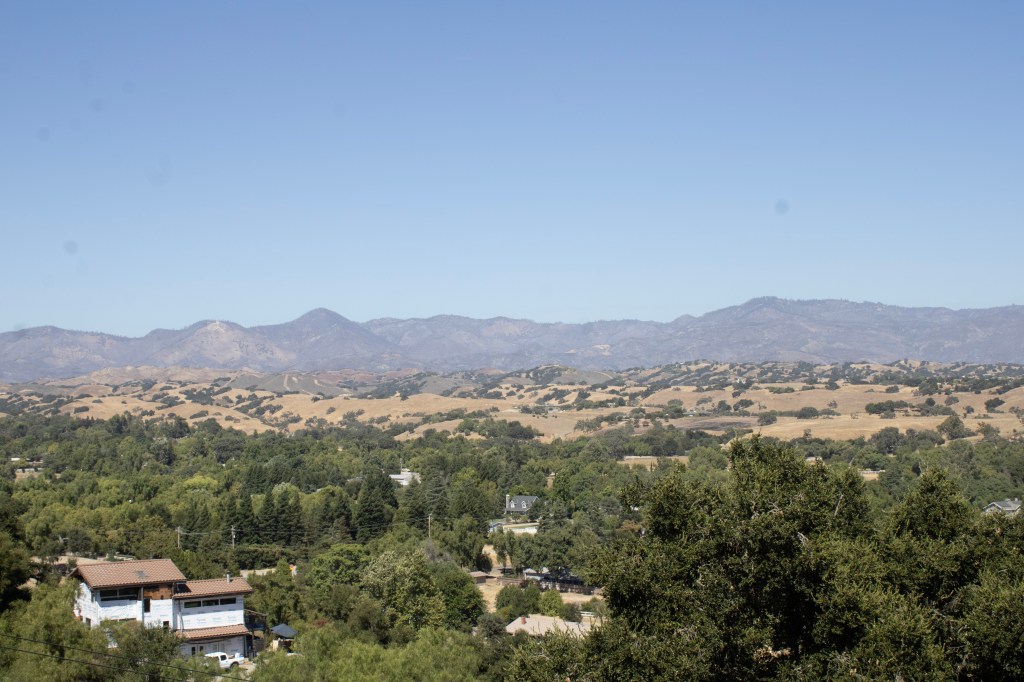
He continued, “The Valley was like the West of legend, with Danish pastry.”
Etling’s work acts as a memoir and a record of the Valley’s history. He has seen the rise of the wine industry, the resurgence of the Chumash tribe, then Governor-Ronald Reagan take up residence in Solvang, and the Neverland Ranch saga unfold. Now, he sees historic businesses close.
Skytt’s Solvang Mill lumberyard, which had been around since the town’s founding in 1911, closed its doors this year. The Valley landmark, Andersen’s Pea Soup, has been in jeopardy of permanently closing for a few years and is now temporarily closed with an unclear future. This is the downside of constant growth.
Conclusion
It seems that modern changes in the Santa Ynez Valley are natural. The current reality is just part of an ongoing pattern. The path of constant progress leaves some behind while others prosper. Yet, that is not much consolation to the young people who can no longer afford to live in their hometown. Many of the same rural people who are scared of being forced out or sad to see change do not support government regulation. However, when an area is as beautiful as the Santa Ynez Valley and gets the attention it does, prices are bound to rise if regulation is not put in place. Sideways played its part in making the modern Valley, before that so did “Little Denmark,” and likely most influential of all so did the construction of Highway 101. But, all of these events are part of the same trajectory. Nature spots still exist, locals still have getaways, but in the Santa Ynez Valley displacement of some for the economic success of others has been an ongoing process.
Leave a Reply